

// Project case study
Civic Sathi
A multi-role civic platform that connects citizen reports, map context, municipal intelligence, registered contractors, and a protected administration boundary.
- Role
- Full-stack developer · Team Vertex (SIH 2026)
- Duration
- Aug – Sep 2026
- Stack
- ReactTypeScriptLeaflet GISFastAPISQLAlchemyPostgreSQL (Neon)Vercel + Render
The Problem
Civic complaints are triaged by hand, duplicated across channels and rarely tracked to resolution.
The Approach
Four role-segregated portals with vision-based triage, embedding-based duplicate detection, a database-aware copilot, sealed-bid tendering and GIS analytics.
The Outcome
A working multi-portal prototype covering the full lifecycle — report, triage, tender, proof of work and audit.
Built by Team Vertex for Smart India Hackathon 2026.
Who it's for
Citizens reporting local problems, municipal officers triaging civic work, registered contractors handling eligible projects, and platform administrators governing the system.
The challenge
Civic services are fragmented across informal messages, maps, departments, and vendors. The product must make reporting easy for residents while giving authorised teams the right context without collapsing every role into one unsafe public dashboard.
What I built
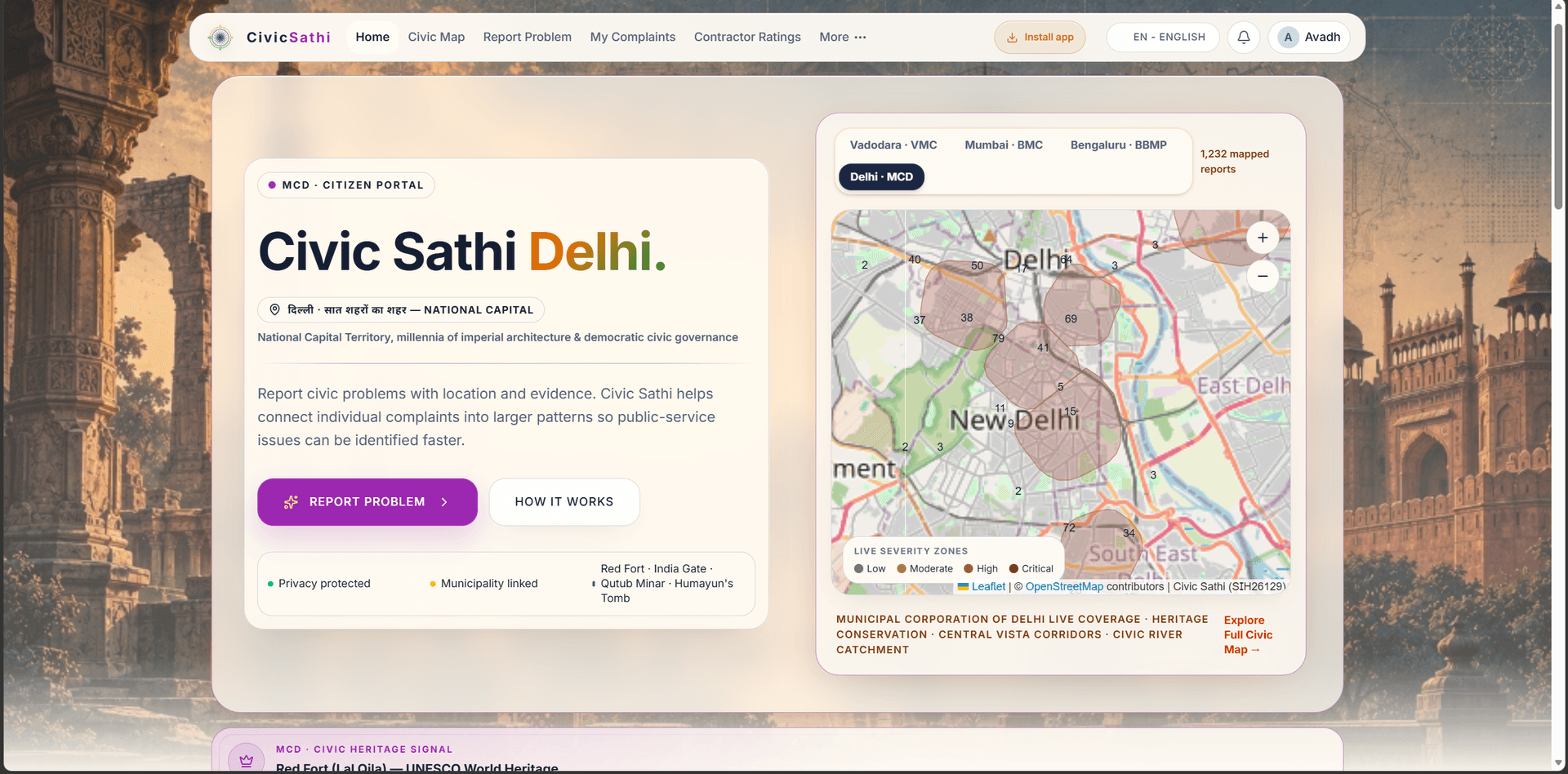
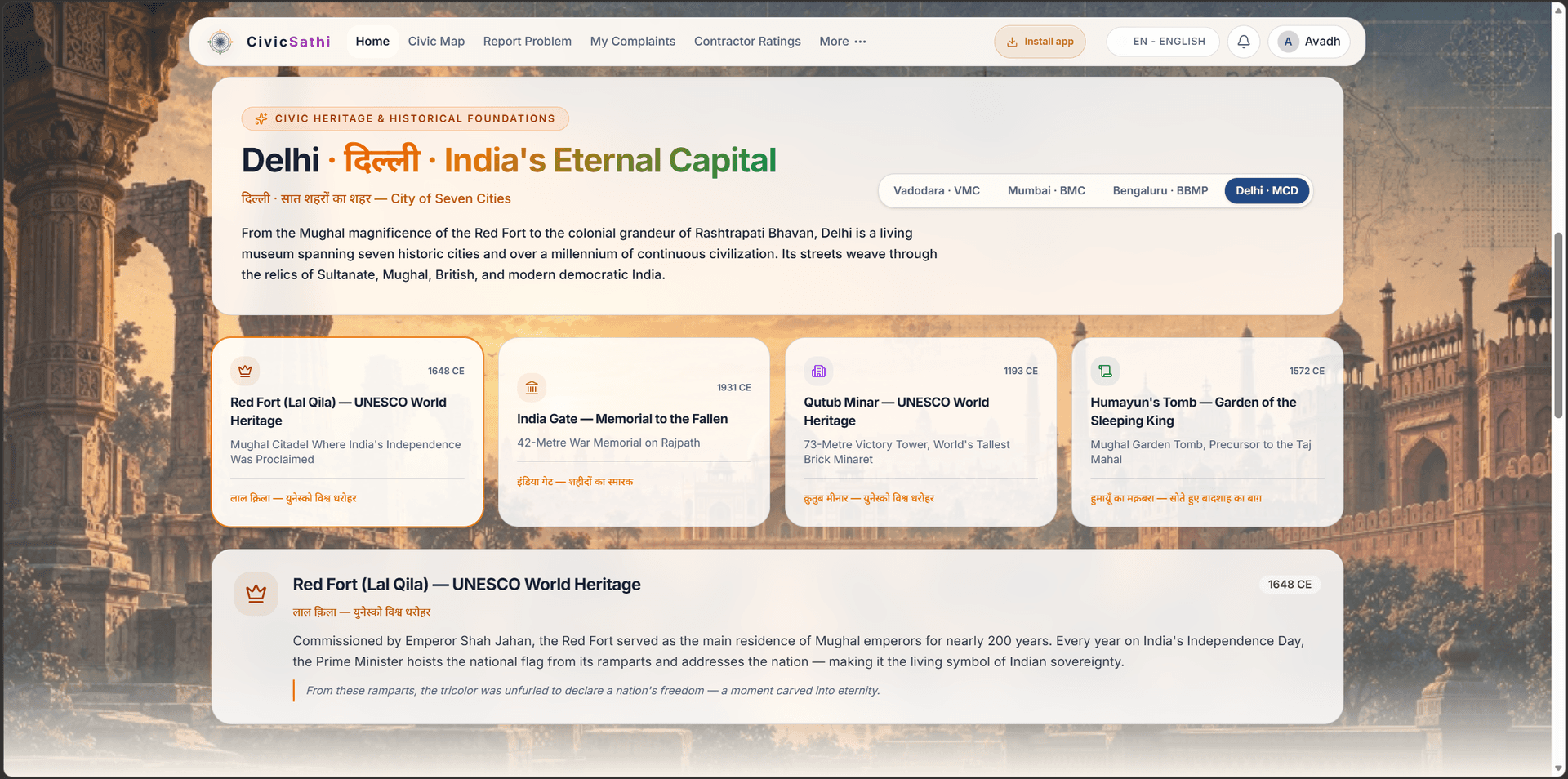
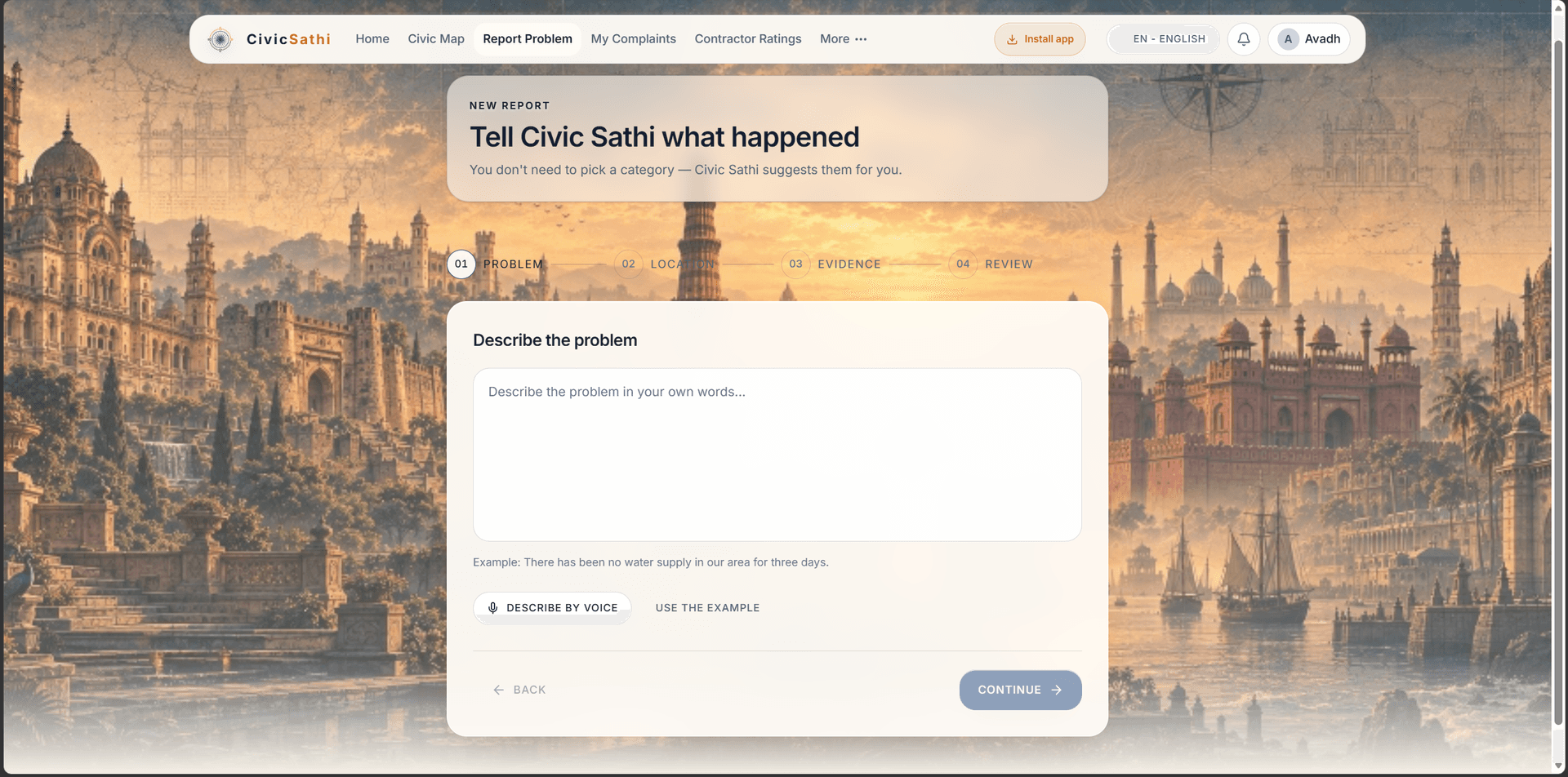
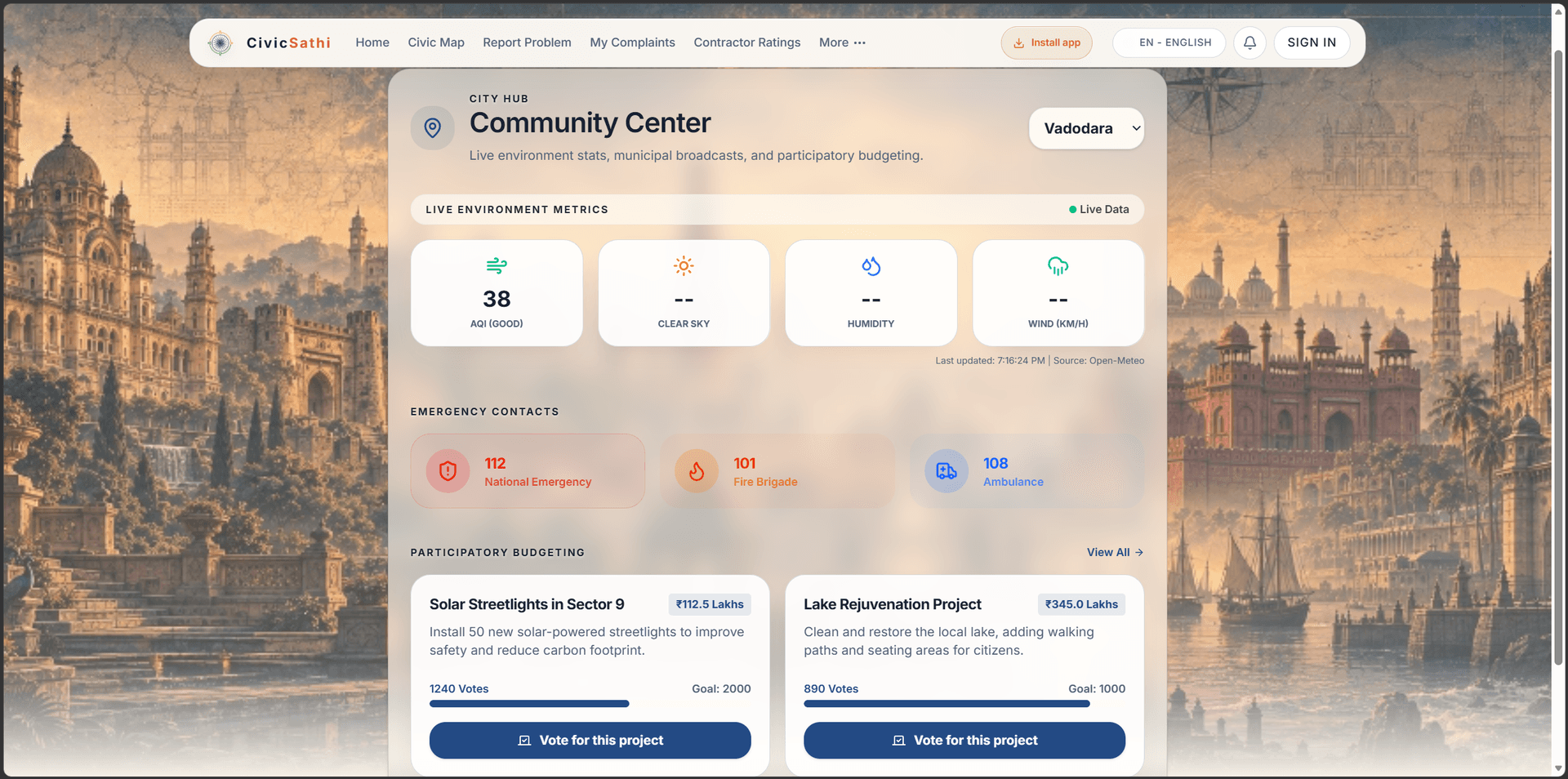
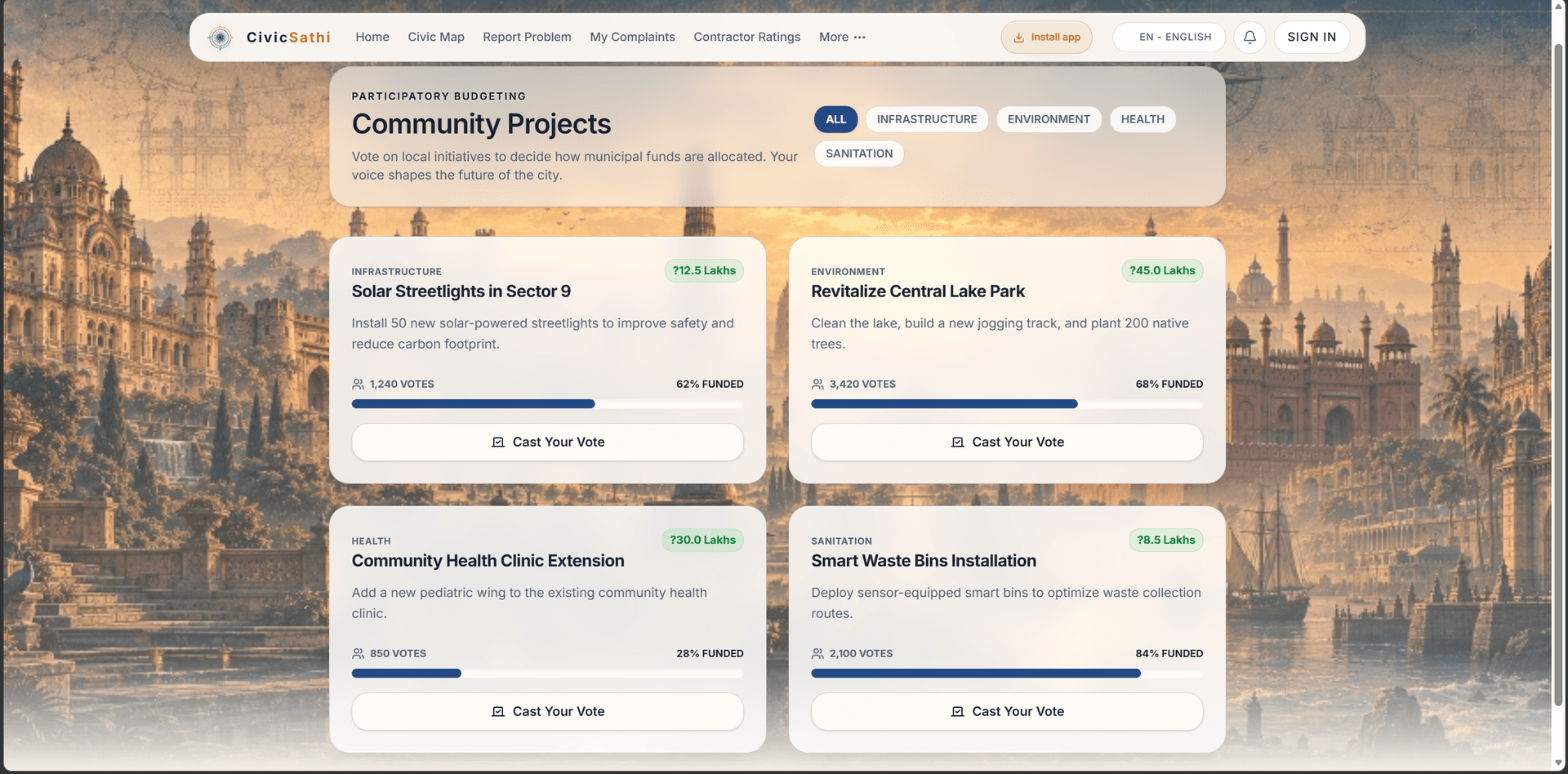
Civic Sathi separates the experience into a public citizen portal, a municipal intelligence portal, a registered contractor portal, and a protected admin surface. Citizens can report a problem with location and evidence, track complaints, explore civic coverage, and choose between Vadodara/VMC and Bengaluru/BBMP contexts. Municipal and contractor access remains behind their own authorised sign-in boundaries.
Why it matters
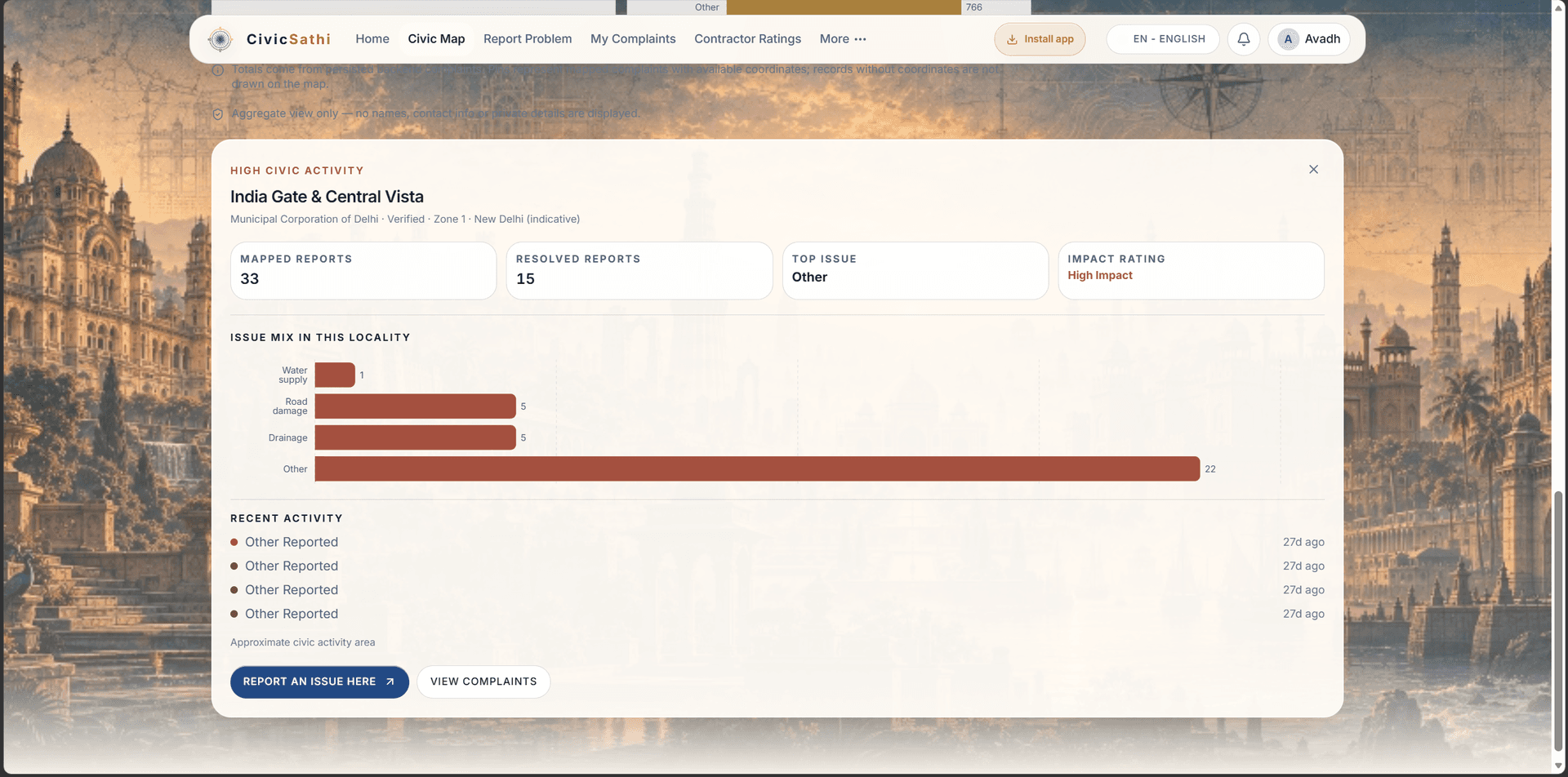
The value is in the handoff: a resident report becomes structured civic context instead of another isolated message. Location, evidence, severity, issue categories, multilingual access, and privacy-protected aggregation create a clearer path from lived problem to accountable municipal work.
How it works
- 01A citizen chooses a city context, reports a problem, adds location and evidence, and tracks the resulting civic record.
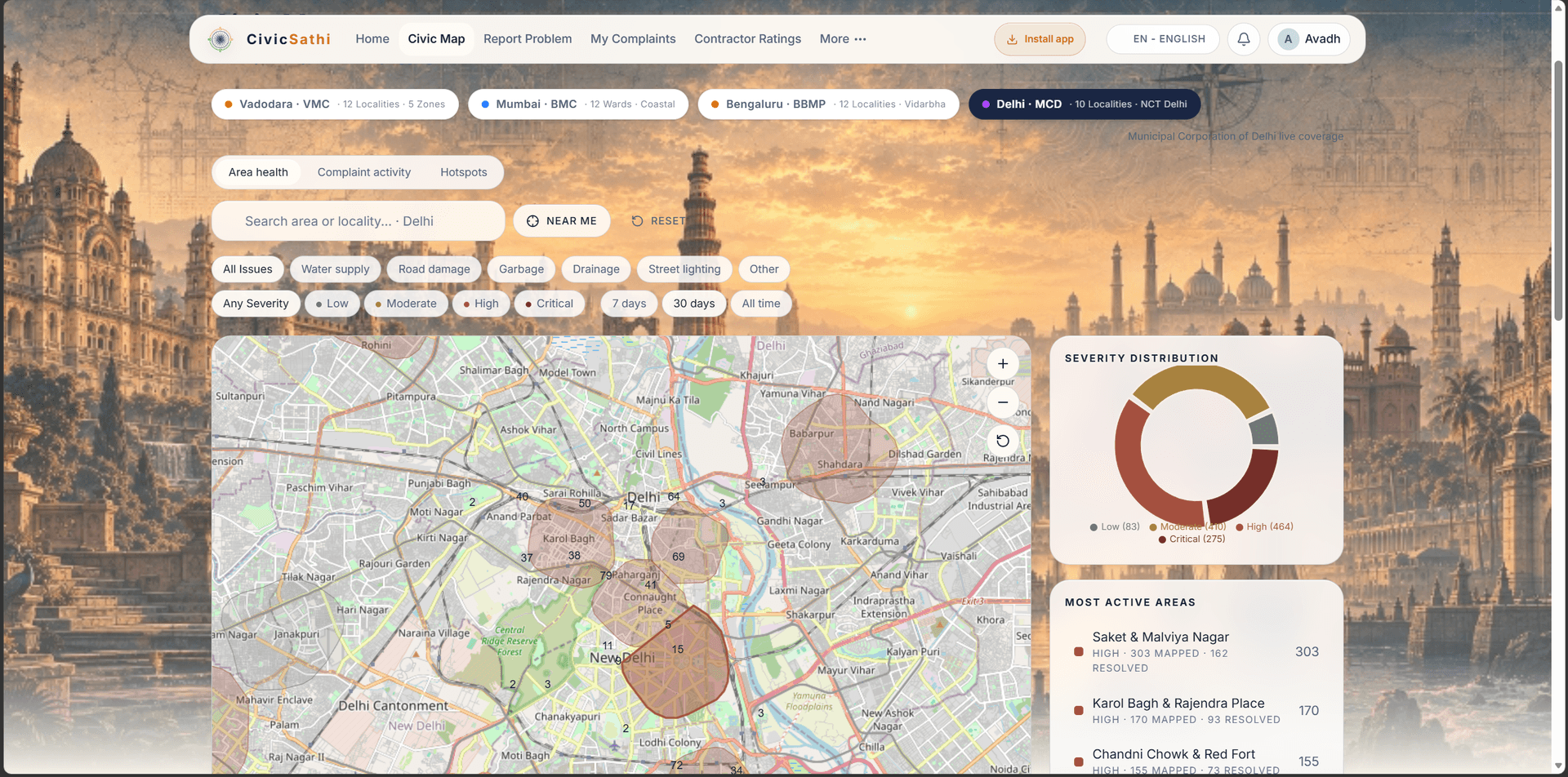
- 02Nearby reports can be grouped into privacy-protected patterns or hotspots without exposing exact private addresses.
- 03Municipal officers enter through the authorised Municipal Intelligence portal to work within their city and department context.
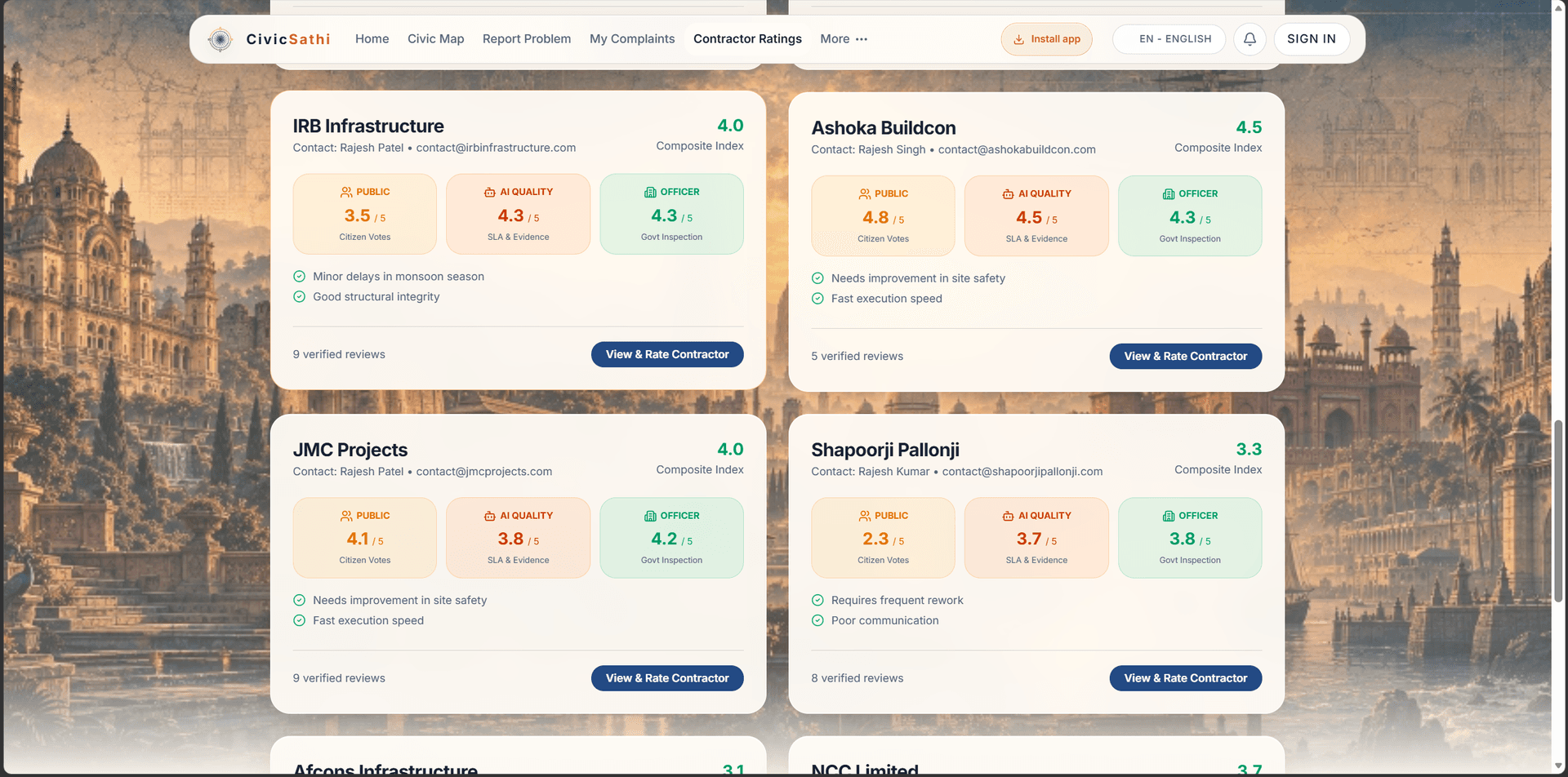
- 04Registered contractors use their separate portal when a municipality assigns or manages eligible civic work.
Scope note
The public citizen portal is fully inspectable. Municipality, contractor, and admin pages expose role-specific sign-in boundaries; this case study includes their public entry screens but does not claim private post-login dashboard behaviour or expose credentials.
System Architecture
- 01
Citizens & officers
4 role portals
- 02
Frontend
React · TypeScript · Leaflet (Vercel)
- 03
Backend
FastAPI · SQLAlchemy · ML (Render)
- 04
Database
PostgreSQL (Neon) · Alembic
- A public citizen portal with Civic Map, Report Problem, My Complaints, language selection, install-app affordance, and city switching.
- A visible four-step reporting model: Report, Location, Evidence, and Track.
- Public issue taxonomy covering water, roads, drainage, sanitation, streetlights, parks, and encroachment.
- Separate authenticated municipality and contractor entry points, with the super-admin surface intentionally kept private.
Screenshots
// Learnings
What this project taught me
- 01Deduplication is the AI feature that saves the most human time.
- 02Strict role segregation is a security feature, not just UX.
- 03Copilots are only trustworthy when they answer from live data.
// Related work

Next project
Neurix Intelligence